
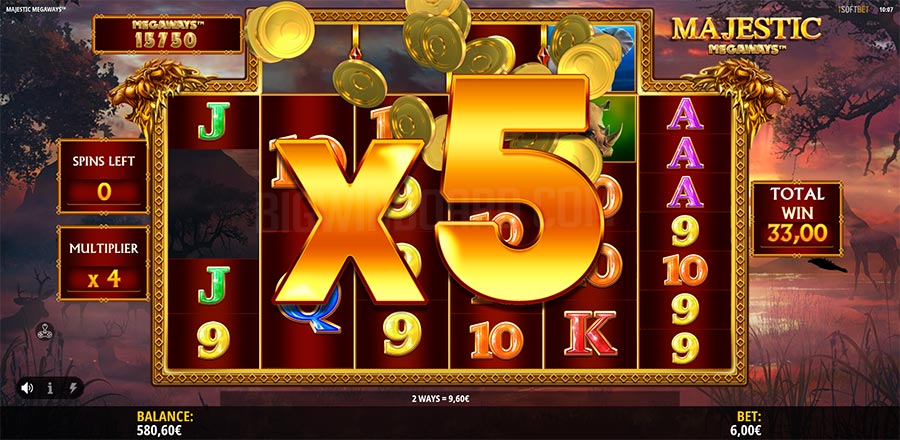
After a long time of dissecting online slots, I’ve discovered that knowing how a game is designed alters how you approach it https://buffalo-demo.com/buffalo-mania-megaways/. You cease just hoping and begin noticing the machinery behind the screen. Let’s get into the structure of Buffalo Mania Megaways. This slot is beyond a attractive theme; it’s a complex creation based on Big Time Gaming’s famous Megaways engine. I intend to strip away the graphics and sound to show you the central mechanics that drive every spin, win, and bonus. When you grasp how the cascading reels function, the dynamic reel modifier, and the mathematics powering the free spins, you’ll recognize the game’s true depth. This is not about guaranteeing a win—it’s about knowing what’s achievable. So let’s scrutinize each piece that helps Buffalo Mania Megaways shine.
The Main Megaways Engine: A Dynamic Reel Model
Buffalo Mania Megaways operates on an engine provided by Big Time Gaming. This system changed slots for good. Ignore static reels with the identical count of symbols every time. Here, each reel can show a distinct amount of symbols on any given spin, typically between two and seven. This layout alters completely with every spin. The result is a massive amount of winning possibilities, up to 117,649 when the grid is at its largest. But the point isn’t just a big number. It’s about how those symbols connect. Every symbol position is its own entity. A win requires matching symbols on adjacent reels, beginning from the leftmost one. Because each reel’s height is constantly shifting, the playing field is never the same. This shifting grid is the foundation of the game, guaranteeing no two spins are ever identical.
How the Tumbling Reels System Integrates
The Megaways engine functions closely with a cascading reels system, often referred to as tumbling reels or avalanches. This combination is where the magic happens. When you achieve a winning combination, those particular symbols vanish from the grid. The game’s code then makes symbols from above descend to fill the gaps, and new symbols drop into the empty spaces at the top. This tumble can spark a chain reaction of wins from your initial spin. Technically, this mechanism is a significant contributor of the game’s volatility. It lets you to earn multiple payouts from a single bet, and it’s the main way you build the multiplier in the bonus round. The cascade continues until no new wins show up.
Symbol Control During a Cascade Sequence
The game has to handle symbols very meticulously during a cascade. It’s not just an animation. The server calculates the new symbol for each position as it becomes available. The order is everything: first, the winning symbols are detected and removed, then the leftover symbols shift down, and finally, new symbols are generated for the top rows. All of this takes place in milliseconds. And here’s the clever bit: those new symbols follow the same Megaways rule. Each new segment of a reel can be again between two and seven symbols high. So the grid can indeed shift its shape mid-cascade, which might unlock even more ways to win on the next tumble.
Symbol Structure and Winning Math
A slot’s system is built on its symbols and what they pay. Buffalo Mania Megaways establishes a clear order. The lower-value symbols are the classic card suits—10, J, Q, K, and A—designed to match the wilderness. The high-value symbols are the animals: the eagle, the wolf, the elk, and the mighty buffalo as the top earner. The buffalo symbol rewards the most. The clever part is how payouts are determined under the Megaways system. You need matching symbols on successive reels beginning from the leftmost reel. But because a one reel can have several rows, you can get several copies of the same symbol on one reel. Each copy adds to the overall count of ways that symbol can create a winning line.
- Top Symbols (Animals): The Buffalo, Elk, Wolf, and Eagle. The Buffalo is the top symbol, delivering the highest payout for five-of-a-kind across a payline.
- Medium Symbols (Card Suits): The A, K, Q, J, and 10 symbols deliver regular, smaller wins that support gameplay balance.
- Bonus Symbols: The Golden Coin scatter symbol and the Sunset Wild symbol. The Wild substitutes for all normal symbols but has its own independent function in the bonus game.
- Payout Calculation: The game’s software multiplies the number of matching symbol instances on reel 1 by those on reel 2, and so on, for each winning line path. Your overall payout is the sum of all such paths for that spin.
Bonus Round Structure: Triggering and Functionality
The free spins bonus round is where Buffalo Mania Megaways gets really intricate. Understanding how it starts and operates is essential. You initiate it by hitting four or more Golden Coin scatter symbols in any position on the reels in one spin. The probability of this occurring is built into the game’s Return to Player (RTP) model to keep things exciting but fair. Once you’re in, you receive 8 free spins to commence. The game switches to a distinct set of rules here. The most significant change is an boundless, rising win multiplier. It starts at 1x and increases by 1 with every cascading win that occurs during the bonus. This multiplier never resets between spins. It just keeps climbing until your free spins expire.
The Function of the Sunset Wild Symbol in the Bonus
In the bonus round, the Sunset Wild symbol undergoes an improvement. This is a intelligent piece of modular design. During free spins, any Wild that hits sticks in place for the rest of the bonus. More than that, each sticky wild has its own multiplier value—2x, 3x, or 4x. This multiplier affects any win that wild is contributing to. View it as a double-layered modifier. The wilds lock down, making it easier to build winning connections as the grid fills up. At the same time, their individual multipliers get factored into the win calculation before the global cascading win multiplier is applied. This stacking of multipliers is how the game achieves its biggest potential payouts.
Retriggering the Free Spins
The game’s design allows you earn more free spins while you’re already in the bonus round. You accomplish this by landing three or more new scatter symbols on a single spin during your free games. The number of scatters awards you extra spins: three scatters grant 5 more, four provide 8, five provide 12, and six give a huge 20 extra spins. This retrigger mechanic does two things. First, it can massively extend your duration in the high-potential bonus round, which is a big hook for players. Second, it immediately determines the game’s volatility. A successful retrigger provides more opportunity for the global win multiplier to grow and for more sticky wilds to land, paving the way for a enormous win.
Volatility, RTP, and Betting Configuration
To really get the architecture, you need to examine the statistical backbone: volatility and Return to Player (RTP). This game is designed as a high-volatility slot. That means wins aren’t frequent, but when they do, they can be significantly bigger than your average bet. This high volatility comes right from the systems we’ve discussed: the dynamic Megaways reels, the cascading wins, and the climbing multiplier in the bonus. These features produce a game of big swings. The published RTP for this title is typically around 96.50%, which lies well within the industry standard. That number is the theoretical percentage of all wagered money the game will repay to players over a very long period.
- Stake Flexibility: The game is built to accommodate a wide range of players through its configurable bet settings. You can change both the coin value and the overall bet level, allowing for exact control over your total stake per spin.
- Autoplay Functionality: The architecture includes a robust autoplay module where you can set a fixed number of spins to play automatically, with optional loss and single win limits to control your session.
- Game Rules & Information: Accessible via the menu, this section gives the official paytable, a detailed explanation of the bonus features, and the verified RTP and volatility ratings.
Technical Performance and Multi-Device Layout
Beyond the game logic, the performance side of Buffalo Mania Megaways guarantees it runs well on all devices. The game is developed using HTML5 technology. It runs directly in your web browser or casino app, no old plugins like Flash needed. This brings some big advantages. It works regardless of a Windows PC, a Mac, an Android phone, or an iPad. The game’s responsive design analyzes your screen size and orientation, then modifies the layout and graphics to fit. Performance is also fine-tuned thoroughly. The developers combined visual quality with efficient code so the game runs smoothly even on phones with less power. Load times are short, and spin results come back from the game server almost instantly.
Visual and Audio Design Fusion
You cannot talk about the architecture without mentioning how the visuals and audio support the play. The graphics feature a warm colour palette of sunset orange tones, prairie golds, and deep blue tones to convey the North American wilderness theme. The symbols are rendered semi-realistically, which allows them to distinguish during the fast tumbling action—a functional design selection. The sound is just as deliberate. The base game features a calm, ambient soundtrack with quiet wildlife noises, giving a impression of wide-open spaces. This quiet makes a sharp difference with the audio that activate during wins and bonus triggers. A distinct, thrilling sound triggers with each cascade, and the move into free spins is accompanied by a impactful music shift and graphic transitions.
Tactical Insights and Player Guidance
Once you grasp how the game is constructed, you’ll think how to play it. No tactic can beat the random number generator, but knowing the architecture leads to more intelligent play. The high-volatility design makes bankroll management your top priority. My recommendation is to set a budget that lets you play for a while, so the game’s natural swings have room to happen. The autoplay feature with loss and win limits is a great tool for sticking to that budget. Also, understanding the bonus trigger is completely random helps you avoid the trap of pursuing it. The most fulfilling sessions usually come from patient play in the base game, waiting for a bonus round where the architecture can really show off.
- Bankroll Management: Set a session budget that allows for several hundred spins. This helps you weather the dry spells that come with high volatility.
- Use Autoplay Limits: Set single win and loss limits in the autoplay menu. This streamlines your session control and fosters responsible play.
- Focus on Enjoyment: Treat the game as entertainment first. Savor the engineering behind each cascade and feature trigger. Any wins are a bonus on top of that.
Typical Architectural Queries Frequently Asked Questions

Players frequently ask me the same questions about how this game is structured. I’ll cover a few from an architectural angle to clarify some common uncertainty. These questions typically focus on how chance-based the features feel, the truth about maximum wins, and reasonable ways to play. Explaining the principles behind it should demystify things and set realistic expectations. Keep in mind, understanding the architecture helps you appreciate the game, but it doesn’t change the fundamental randomness of each spin.
Is the bonus round really random, or is it on a timer?
This is important a lot. The bonus round trigger is completely random on a per-spin basis, controlled by the RNG. There’s no hidden timer or “due” system. Every spin has its own independent chance of landing the four or more scatters you need. The game’s architecture uses a probability model where that event is fairly rare, which fits the high-volatility design. It might feel like a bonus is overdue after a long session, but that’s just how probability feels sometimes. The game doesn’t recall your past spins to change future ones.
What is the actual potential for hitting the maximum win?
The maximum win, often shown as a huge multiplier of your bet, is a calculated limit set in the game’s maths. To truly hit it, you’d need a perfect series of events: trigger the bonus, retrigger it multiple times to get more spins, fill the grid with high-value buffalo symbols, and land lots of high-multiplier sticky wilds while the global multiplier rises. The odds of that exact sequence are incredibly low. It serves to show the game’s upper limit and to create excitement. It is not something you should expect to see in a normal session.
Is there an ideal betting strategy for this game’s architecture?
Since the core mechanic is random and each spin is unconnected, no betting strategy can change the result of a spin. But understanding the architecture can lead to better bankroll management. Because this is a high-volatility game, I suggest a budget that can manage long stretches without a big win. The dynamic Megaways system means wins can sometimes come in clusters after a calm period. A standard approach is to pick a bet size that lets you spin a few hundred times. That gives the game’s volatility enough room to potentially cycle through its variance.